www.jonathansafranfoer, alles over de Amerikaanse schrijver Jonathan Safran Foer. Op deze site leest u alles over zijn leven en zijn boeken d.m.v. fragmenten, recensies, artikelen en interviews.
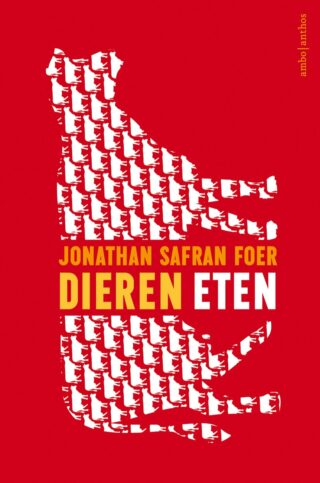
Dieren eten
Pocket € 7,50
ISBN 978 90 263 2463 5
Luxe paperback € 19,95
ISBN 978 90 263 2167 2
Gebonden € 24,95
ISBN 978 90 263 2273 0
Vertaling Otto Biersma
Tot enkele jaren geleden was Jonathan Safran Foer afwisselend vegetariër en vleeseter.Toen hij echtgenoot en vader werd, stelde hij zichzelf de vraag: waarom eten we dieren? En zouden we ze ook eten als we wisten hoe ze op ons bord terechtkomen?

In een briljante synthese van filosofie, literatuur, wetenschap en undercoverjournalistiek onderzoekt Foer in Dieren eten de verschillende verhalen die we onszelf vertellen om ons eetgedrag te rechtvaardigen – van folklore tot populaire cultuur, van familietradities tot westerse mythen – en laat hij zien hoe die verhalen onze onwetendheid in stand houden.

Dieren eten getuigt van sterke morele gedrevenheid en grote ruimhartigheid,voor mensen en voor dieren. Het is geschreven met de stilistische brille en creativiteit die Foers twee vorige boeken tot bestsellers maakten. Het resultaat is een prikkelend en uitdagend boek over de verhalen die ons verteld worden – en de verhalen die ons verteld moeten worden.

Dit verhaal is niet begonnen als een boek. Ik wilde gewoon weten – voor mezelf enmijn gezin – wat vlees is. Ik wilde het zo concreet en veelomvattend mogelijk weten. Waar komt het vandaan? Hoe wordt het geproduceerd? Wat zijn de economische, maatschappelijke en milieueffecten? Kun je van sommige dieren zeggen dat het goed is om ze te eten? Bestaan er vormen van veeteelt die zonder bedenkingen goed zijn? Als de intensieve veehouderij verkeerd is, hoe zit het dan met veeteelt die goed is voor het milieu, veeteelt waarbij dieren niet alleen leed wordt bespaard, maar waarbij ze echt een goed leven hebben dat eindigt met een grotendeels pijnloze slacht? (Die vorm van veeteelt bestaat.) Zijn er situaties waarin het niet eten van dieren verkeerd is? Kun je bij dit soort vragen eigenlijk wel spreken van goed en verkeerd? Hoewel dit als een persoonlijke speurtocht begon, is het dat niet lang gebleven. Door mijn inspanningen als ouder kwam ik oog in oog te staan met feiten die ik als burger niet kon negeren en als schrijver niet voor mezelf kon houden.
'A well-researched piece of personal journalism', Cook's shelf 16-10-'09
'A blend of solid—and discomforting—reportage', Kirkus Reviews oktober 2009
Eating Animals, Oprah Magazine november 2009
Quotes, MO* Mondiaal nieuws, De Volkskrant, Trouw, De Standaard
'A well-researched piece of personal journalism'
Reading Michael Pollan's The Omnivore's Dilemma fucked me up good. It changed the way I looked at food forever and seriously altered the way I actually ate. Considering that eating is my vocation, this was no small thing. I have never looked at an ear of corn the same way again.
Jonathan Safran Foer's new book, Eating Animals, fucked me up even worse, and did so for a couple of reasons, which I will get to in a second. First, though, I think it important to answer a few of very basic questions.
1) Yes, I mean that Jonathan Safran Foer. The guy who wrote Everything Is Illuminated and has been called a genius by the New York Times.
2) No, this one isn't a work of fiction. It is actually a surprisingly astute and well-researched piece of personal journalism done by a fella previously known only for his ability to put many, many words together into pretty patterns. That isn't an easy leap to make. Foer manages it with elan.
3) Yes, it is about his conversion to vegetarianism. Sorta. Depending on which source you believe (and depending, partly, on Foer's own slightly confused telling), he might've been a vegetarian since age ten, twelve or fifteen. Basically, this is a story of a man going from being an occasional vegetarian to being one full-time. More specifically, it's the story of why.
4) Yes, it is amazing that I am reading a book about vegetarianism. At least it would probably seem that way to anyone who knows me only through my writing. In the real world? Not so amazing at all. Food is my life. I want to know everything I can about it. And right now? Foer is a man who knows a lot about food.
5) No, you should not read this book if you ever want to eat comfortably again.

Eating Animals is not an easy book to read. It ain't pretty. It ain't nice. It is (like Fast Food Nation before it and The Jungle before that) a scathing, brutal indictment of the factory-farm system that controls roughly 99 percent of the meat we eat every day, from the moment of an animal's birth to the instant of its screaming, horrific death. It is sensational, but not hyperbolic -- Foer is too smart a writer for that. It is both deeply personal and (surprisingly) objective. Finally (spoiler alert!) he ends up a committed vegetarian by the last page. And I nearly did, too.

Some words from the man himself:
"I have placed my wager on a vegetarian diet and I have enough respect for people...who have bet on a more humane animal agriculture, to support their kind of farming. This is not in the end a complicated position. Nor is it a veiled argument for vegetarianism. It is an argument for vegetarianism, but it's also an argument for another, wiser animal agriculture and more honorable omnivory.
"If we are not given the option to live without violence, we are given the choice to center our meals around harvest or slaughter, husbandry or war. We have chosen slaughter. We have chosen war. That's the truest version of our story of eating animals."

After 250-some pages of some of the most graphic and disturbing images outside of a PETA rally, I can't argue against that. Slaughter? Yes. War? Absolutely. And Foer does not toss those words around lightly. He shows, again and again and again, that, by and large, we do not just grow animals and harvest animals and eat animals, but have been involved in an on-going and ever-increasing animal genocide. Worse, we grow new animals just so we have new animals to kill. Worse still, we are all complicit. He has the facts and the figures to back him up. He has right (a moral and philosophical right, even an economic and social right) on his side, which makes his position damnably difficult to assail.
But, then again, I have bacon on my side. And bacon is tough to argue with, too.
I won't go into exhaustive detail here about the nightmares that Foer has given me. I won't presume to cherry-pick at his research. Honestly, this is one of those books that needs to be read in whole, not in bits and pieces, because its greatest triumph is in structure -- in the way that he has layered his argument and given voice (if not quite equal voice) to both sides of the herbivore/omnivore debate (with a particular shout-out to Bill Niman and Niman Ranch in the days before Bill was forced out of the company that still bears his name), the way he has woven his own personal narrative through the grunt work of investigative journalism.
Eating Animals is one of those stories that everyone should read. It's one of those that no one should read. It's one of the rare ones that leaves you, at its finish, not just moved enough to do something, but ashamed at doing nothing. And that, kids, is like playing with uranium. Open the box and it's already too late. There are some things that you just can't un-know once you know them, and Eating Animals is full of things I wish I didn't know.
It's too late for me. You'll have to make your own decisions. But don't say I didn't warn you.

Jason Sheehan, Cook's Shelf op Westword Denver Food Blog
'A blend of solid—and discomforting—reportage'
Celebrated novelist Foer examines the ethics and practical realities of eating things with faces.
The author’s first book-length work of nonfiction opens with a reminiscence of a grandmother who scraped for food to stay alive during the dark years of the Holocaust, yet refused to violate kashrut law to eat a proffered piece of pork, saying, “If nothing matters, there’s nothing to save.” Against that time of want and the food insecurity his grandmother expressed for the rest of her life, Foer examines this time of too-muchness, of cupboards full of luxuries and days full of meaty meals made possible by an elaborate system of factories, stockyards and slaughterhouses. “Eating animals,” he writes, “is one of those topics, like abortion, where it is impossible to definitively know some of the most important details…and that cuts right to one’s deepest discomforts, often provoking defensiveness or aggression.”
To his credit, the author is not shy of exploring his own discomforts while engaging in near-Talmudic analyses of the finer points of being a carnivore: If a pig is as smart as, if not smarter, than a dog and just as fond of playing with toys, then why aren’t they allowed to curl up next to the fire with us? Of course, Foer allows, there are cultures where eating dogs is considered a good thing, though none that come to mind where having pigs as pets is common. Given the environmental costs of eating meat—“for every ten tuna, sharks, and other large predatory fish that were in our oceans fifty to a hundred years ago, only one is left”—and the looming sense that a time of scarcity is again in the offing, Foer’s case for ethical vegetarianism is wholly compelling.
A blend of solid—and discomforting—reportage with fierce advocacy that will make committed carnivores squeal.
Kirkus Reviews oktober 2009
Eating Animals
No one has ever accused Jonathan Safran Foer of being timid. But for a hot young writer to train his sights on a subject as unpalatable as meat production and consumption takes raw nerve. What makes eating animals so unusual is vegetarian Foer’s empathy for human meat eaters, his willingnes to let both factory farmers and food reform activists speak for themselves, and his talent for using humor to sweeten a sour argument.
Oprah Magazine november 2009
Quotes
'Jonathan Safran Foer, de enorm populaire auteur van romans als Extreem luid & ongelooflijk dichtbij gooit met zijn jongste boek een dikke steen in de vijver van onze eetcultuur.'
MO* Mondiaal nieuws

'Foer is dan weer verhalenverteller, dan weer filosoof, dan weer cultuur-socioloog, dan weer journalist op reportage of een feitenzoekende inspecteur. Hij speelt met schrijfstijlen en vormgeving, schrijft vaak prachtig en soms loodzwaar. Maar bovenal is Dieren eten ontluisterend - verplichte kost voor elke omnivoor.'
De Volkskrant

'Zelden heb ik een boek gelezen waar zo'n sterk moreel appčl van uitgaat. Sinds het uit is, eet ik nog wel zuivel en vis, maar geen vlees meer. Hoe lang dat vol te houden is? Geen idee. Maar zolang Dieren eten in de boekenkast staat, zal deze slimme en warmhartige schrijver me met zijn akelig ernstige blik blijven aanstaren.'
Trouw

'Foer maakt er zich niet alleen vanaf met een goed geschreven persoonlijk verhaal. Hij zoekt de feiten op en checkt zijn bronnen, maar gaat ook undercover in de Amerikaanse voedingsindustrie. Dat levert een catalogus op van de oorlogstactieken van de visserij en de horrorpraktijken van de industriële veefokkerijen. Foer schetst apocalyptische taferelen van genetisch gemanipuleerde rassen tot 'foutjes' bij de slacht, maar doet evengoed een poging om vleeseters te sussen met lieflijke verhalen van biologische kwekers en zachtaardige slachters. Voor hem staat de keuze evenwel vast: geen kalkoen met Thanksgiving.
Foers bevlogen boek kon zelfs al enkele columnisten en recensenten in een klap overtuigen om vegetariër te worden.'
De Standaard